Showing posts with label Elswout. Show all posts

Monday, March 12, 2018

The Flora and Fauna of Elswout

Elswout, the land of alder trees and canals, is quite scenic. Therefore it is best to let the pictures, with a little of my own narration, speak for itself.

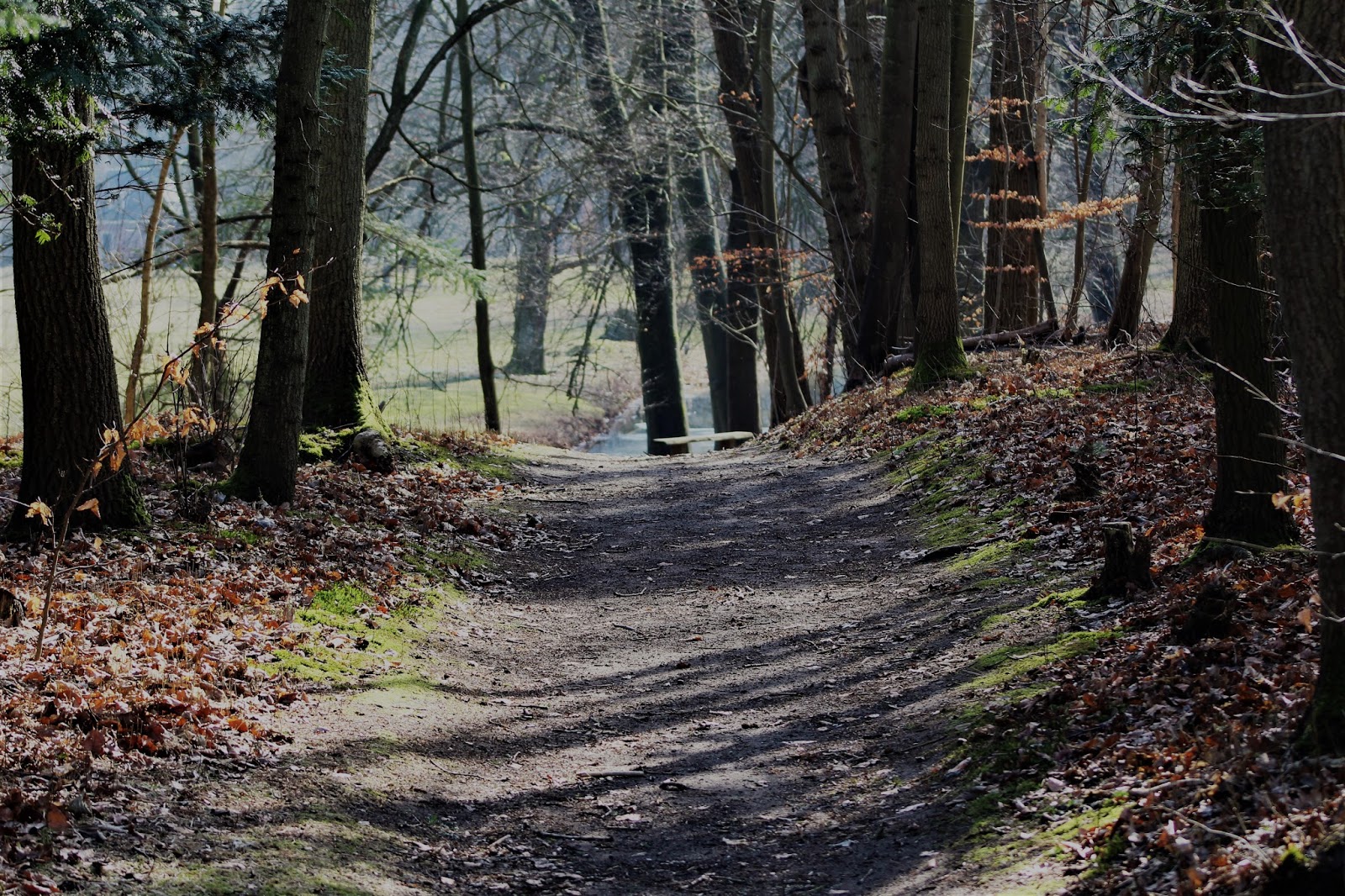
The path to the estate runs adjacent to a residential area. As a consequence there are lots of cyclists and walkers on it at all hours of the day.

A canal flows parallel with the path, turning to the right as the path heads toward the entrance gate, which can be seen as the red brick building in the background.


Geese and pheasant loiter in the field, harassing each other in a spring time mating ritual.

There are strategically placed bridges over many of the canals, affording access to the main house which was originally constructed on a patch of land surrounded by a moat. Statues of women huddle in the moat sporting coats of green moss.


Meanwhile a herd of deer live on the estate, occasionally competing with resident sea gulls for food and the attention of visitors. Territorialism bounds across species. This last image reminds me of a painting by Jan Asselijn entitled The Threatened Swan. 
Jan Asselijn
The Threatened Swan, 1650
oil on canvas
144 x 171 cm
Rijksmuseum
The image is large, a feature pronounced by the life-sized swan in the center of the painting. The swan's outstretched wings and defensive stance can be explained by the menacing dog in the lower left corner of the painting. This bird is defending her nest. White feathers flutter in the air, landing on the water and at the bird's feet. It seems like a life or death moment, as though the swan's very survival is at stake. 

The composition is a bit off-balance. The wing tips on the right are cut off, the majority of the action in the painting runs on a diagonal line between the swan's beak and the dog's muzzle. 

There is some debate about the meaning of this work, largely because words were painted onto the canvas some time after it was completed which politicized the conflict between the swan and the dog, rendering an allegory of intrigue by implying that the swan symbolized Johan de Witt who was protecting Noord-Holland from the depradations of the state, symbolized as a dog. 

The problem with this interpretation is that the events took place nearly 25 years after the painting was completed. 

This may be an example of reading too much into it. In Asselijn's case, perhaps it is just a bird defending her nest.

Tuesday, March 6, 2018

A Walk in the Park

Finally. The historic cold snap of 2018 is over. Today dawned clear and almost warm. As an indication of the change in temperature, I only wore three layers instead of the usual five.

And so with the beautiful day at hand, we went for a walk along the path less traveled.

To the west of Haarlem, between the city and the beach, nestles the magical estate of Elswout.
Elswout at Overveen

Originally constructed in the early decades of the 17th century for a wealthy Dutch confectioner who went bankrupt before it was completed, the palace at Elswout was purchased by Gabriel Marcelis in 1635.

Marcelis, a weapons merchant and diplomatic advisor to King Christaan IV of Denmark, used the estate for his summer residence.
Peter Nason
Portrait of Gabriel Marcelis
1669
Museum of Natural History,
Hillerød, Denmark

This was typical for the merchant elite in the 17th century. Their wealth from trade, coupled with a desire to escape the crime and pollution found in the cities, made country properties like Elswout quite appealing. Essentially it was Marcelis' beach house.

The name Elswout is a derivation of the words alder (els) and wood or forest (hout). The alder is a type of tree that commonly grows in this region. Indeed, alder flourishes near water and, in The Netherlands, there is water everywhere. So much so that the Dutch people have spent hundreds of years and much backbreaking labor to hold back the North Sea.

One of the commodities used to fortify the canals and dikes around Noord-Holland was sand. And it was the sand dunes at Elswout that Marcelis excavated to produce a classical French landscape design. Marcelis hired workers to dig canals around the estate, selling the sand which was transported by boat to Amsterdam.
While there are many canals at Elswout, the main one that runs through the property is called Marcelisvaart.

This, along with the family coat of arms which appears on the gatehouse, memorializes the Marcelis name on the estate.

Marcelis crest at Elswout
photo courtesy of Marcel Tettero


Today the crest appears on the west facade of the gatehouse entrance to Elswout. Divided into quarters, the top left and bottom right depict armored soldiers.

The top right and bottom left present cannons crossed. Each set of cannons are topped with a crown. These symbols strongly hint at Marcelis' role as an arms merchant for the King of Denmark.

At the center of the crest is a shield containing the image of a house. The viewer might be correct in assuming this is a depiction of Elswout. The crest is surrounded by two lions -- a symbol of Holland in the 17th century -- and topped again with a crown.

There are several extant paintings of Elswout as it existed in the 17th century, including this one by Jan van der Heyden.

Here the viewer looks down on the estate.

The expanse of blue sky and clouds are typical of Dutch landscape paintings of the era. One can see the symmetrical layout of the gardens, typical of the classical French garden design.

Jan van der Heyden
View of the Elswout Estate
c. 1660, 39.5 x 34 cm
Frans Hals Museum, Haarlem

It was during this time, around 1665, that Marcelis changed the orientation of Elswout from a south - north entrance to one looking from the east to the west. Van der Heyden's painting of the estate depicts the new view looking to the west.

above the entrance arch

2023 Reading List

The year begins in Panama, which influences the reading selections. Also I have set a goal for myself: I want to read at least one book each...