- I picked this book from my daughter's bookshelf to read on the plane as I flew home from Scotland. Really it was intended to be diversion but ended up being a well written history of the reign of Boabdil, the last sultan of Granada whose life coincided with the rise of the Catholic Monarchs, Isabelle and Ferdinand. It's a sympathetic rendering of the tough choices and their consequences leading to Boabdil's ignoble end.

- Any title by Umberto Eco is worth the time and energy to read. This book is set in a monastery in the 14th century. It's part murder mystery, part theological treatise delving deeply into sectarian disputes within the Catholic Church. Eco is a profound writer, capturing character, narrative arc and foreshadowing tools to tell the story of a wayward monk's apprentice who attempts to solve a series of murders in the abbey. Looking for an absorbing novel? Here's one for you.
- This is a silly book written by an American guy who left the States to live in Costa Rica. He writes about monkeys and crocodiles, tourists and chocolate. It's fun and easy, and I recommend it for anyone thinking of travel to Costa Rica.
Gudmonson, Lowell and Justin Wolfe, eds. Blacks and Blackness in Central America: Between Race and Place. Duke University Press, 2010.
- This is one of the background books I used to research before heading to Panama. As an anthology it works nicely to introduce some of the topics related to people of African ancestry in Central America. It is an academic text, however, and a few of the selections assumed a level of knowledge from the reader.
Hannah-Jones, Nikole, et al. The 1619 Project: A New Origin Story. 1st ed., One World, 2021.

- Black history is American history. That's the premise of this seminal text featuring photographs, poetry and rich history that documents the relationships between Black, white and Indigenous Americans from 1619 to 2021. The intersectionality of topics and dynamic writing make this a must-read book for everyone.
- I actually don't remember when or why I purchased this book. It may have been something recommended by Alistair Moffat, whose walking memoir appears in this list and which I read while in Scotland. At any rate, Rachel Joyce has written a sweet novel about relationships and the power of life events to shape one's personality. It is simultaneously inspiring and intriguing. Joyce develops the characters carefully, and then surprises the reader with an unexpected conclusion. It worked well for me as easy airplane reading.
- This is an insightful overview of several rock art sites in Central America. In particular, this article identifies some of the features of the Caldera site south of Boquete, Panama which I plan to visit in a few days.
- Although the title doesn't reflect it, this book is about the history of maps. Menzies writes of Chinese exploration around the world in the early 15th century, and the ways in which subsequent explorers such as Columbus, Vasco de Gama, Coronado and many other used the maps created by the Chinese to find their way. It's a controversial book. At one point Menzies claims Christopher Columbus and his brother Bartholomew "forged a chart [they] knew was bogus" and engaged in other activities "under false pretenses" to convince the Catholic Monarchs to fund Columbus' 1492 exploration (434). Despite these kinds of controversial statements, I found the text interesting and imaginative. It is the perfect book to finish 2022!
- Let me start by saying that I love this book! It is delightfully written with a nice balance of travelogue and history about some very old roads in Scotland. Along the way, I was inspired to visit some of the locations Moffat writes about. His humor, grace and personal reflection shine through on every page. This is a good companion for walking Scotia.
 Ngai, Mae. The Chinese Question: The Gold Rushes and Global Politics. W.W. Norton & Co., 2021.
- There is a new kind of history emerging, not just in the US but in universities all across the world. It's known as Global History, focusing on the intersectionality of a topic across time and space. Mae Ngai's recent history about the role of racism, nativism and immigration among Chinese gold miners is one example. In it, Ngai focuses on the Gold Rushes of California, Australia and South Africa as a way of showing the intersectionality of these global events on individual people. It's a good book, an interesting approach to history and for it Ngai won the prestigious Bancroft Prize in 2022.
Olien, Michael D. “Black and Part-Black Populations in Colonial Costa Rica: Ethnohistorical Resources and Problems.” Ethnohistory, vol. 27, no. 1, Duke University Press, 1980, pp. 13–29, https://doi.org/10.2307/481625.
- In pursuit of learning about the history of Black folk in Costa Rica I came across this article from 1980. It's dated but contains some intriguing information about 17th century shipwrecks and pirates on the Atlantic coastal region of Central America. And who doesn't love a good pirate story? This article also contains a nice overview of archival repositories in San Jose, Costa Rica.
Petras, Elizabeth McLean. Jamaican Labor Migration: White Capitol and Black Labor, 1850 - 1930. Westview Press, 1988. Online.
- My daughter told me about a research project she's working on at university. The topic was so interesting that I cruised around the database called Internet Archive, where I located this book. In it, Petras outlines some of the key issues facing Jamaicans after the collapse of the sugar cane industry and the abolition of slavery in the mid-19th century. Essentially, Jamaican men became the predominant migrant labor source for construction projects on the Panama Canal, as well as in Cuba, Costa Rica and the United States. Reading this book makes me want to visit Jamaica.
Pineda, Baron L. “Nicaragua’s Two Coasts.” Shipwrecked Identities: Navigating Race on Nicaragua’s Mosquito Coast. Rutgers University Press: 2006. 21– 66. https://doi.org/10.2307/j.ctt5hj296.4.
- This chapter follows up on my pursuit of pirates and shipwrecks along the east coast of Central America. The premise of the chapter is that the Black presence in Nicaragua and Costa Rica may date to one particular slave ship which was wrecked in the waters off Nicaragua's eastern coastline around the year 1640. Survivors intermarried with some of the Indigenous groups in the region. I'm on the hunt to learn more.
Procter, Alice. The Whole Picture: The Colonial Story of the Art in Our Museums and Why We Need to Talk About It. Octopus Publishing, 2021.
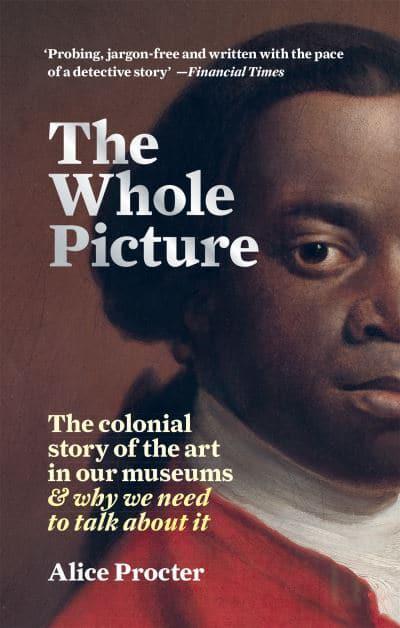
- I picked up this book at the David Livingstone Birthplace Museum outside Glasgow, Scotland. It has been a fun and interesting read while traveling between Glasgow, Bridge of Allan and Edinburgh. Procter points out uncomfortable truths about some of the objects found in museums such as human remains or ritual artefacts stolen by Europeans from societies under European colonial rule. Art and museum collections care management will become increasingly relevant as we head into the middle of the 21st century.
- In September, I visited the Wardlaw Museum in St. Andrews, Scotland. This title was on the shelf in the museum bookshop and on a whim I bought it. Sanghera does a good job presenting the idea of empire and its impact on peoples and cultures around the world. My conclusion: I am a product of empire, as the British colonial experience shaped my ancestors in the 17th century ... both in England and in North America. If you are looking for solid reading about the long arm of empire, this is the book for you.
- This article articulates some of the key elements of rock art in Central and South America. As an overview to the topic, it identifies three types of rock art: geoglyphs, pigment arts and petroglyphs. Troncoso et al also provide examples of each type from pre-contact and post-contact societies. I read this article in preparation for a site visit to the petroglyphs called Piedras Pintadas en Caldera south of Boquete, Panama.


