Showing posts with label books. Show all posts

Monday, February 14, 2022

2022 Reading List

This year began with renewed plans for travel, first to Scotland with my daughter and then to Panama with my husband. Many of the titles here represent preparations for or readings completed during these visits.  

Drayson, Elizabeth. The Moor's Last Stand: How Seven Centuries of Muslim Rule in Spain Came to an End. Profile Books, 2018.
  • I picked this book from my daughter's bookshelf to read on the plane as I flew home from Scotland. Really it was intended to be diversion but ended up being a well written history of the reign of Boabdil, the last sultan of Granada whose life coincided with the rise of the Catholic Monarchs, Isabelle and Ferdinand. It's a sympathetic rendering of the tough choices and their consequences leading to Boabdil's ignoble end. 

Eco, Umberto. The Name of the Rose. William Weaver, trans. Harvest Books, 1994.
  • Any title by Umberto Eco is worth the time and energy to read. This book is set in a monastery in the 14th century. It's part murder mystery, part theological treatise delving deeply into sectarian disputes within the Catholic Church. Eco is a profound writer, capturing character, narrative arc and foreshadowing tools to tell the story of a wayward monk's apprentice who attempts to solve a series of murders in the abbey. Looking for an absorbing novel? Here's one for you. 


Ewing, Jack. Monkeys are Made of Chocolate: Exotic and Unseen Costa Rica. PixyJack Press, 2005.

  • This is a silly book written by an American guy who left the States to live in Costa Rica. He writes about monkeys and crocodiles, tourists and chocolate. It's fun and easy, and I recommend it for anyone thinking of travel to Costa Rica.

Gudmonson, Lowell and Justin Wolfe, eds. Blacks and Blackness in Central America: Between Race and Place. Duke University Press, 2010.

  • This is one of the background books I used to research before heading to Panama. As an anthology it works nicely to introduce some of the topics related to people of African ancestry in Central America. It is an academic text, however, and a few of the selections assumed a level of knowledge from the reader. 

Hannah-Jones, Nikole, et al. The 1619 Project: A New Origin Story. 1st ed., One World, 2021. 

  • Black history is American history. That's the premise of this seminal text featuring photographs, poetry and rich history that documents the relationships between Black, white and Indigenous Americans from 1619 to 2021. The intersectionality of topics and dynamic writing make this a must-read book for everyone.
Joyce, Rachel. The Unlikely Pilgrimage of Harold Fry: A Novel. Random House, 2012.
  • I actually don't remember when or why I purchased this book. It may have been something recommended by Alistair Moffat, whose walking memoir appears in this list and which I read while in Scotland. At any rate, Rachel Joyce has written a sweet novel about relationships and the power of life events to shape one's personality. It is simultaneously inspiring and intriguing. Joyce develops the characters carefully, and then surprises the reader with an unexpected conclusion. It worked well for me as easy airplane reading. 
Künne, Martin, Lucrecia Pérez de Batres, and Philippe Costa. “Recent Rock Art Studies in Eastern MesoAmerica and Lower Central America, 2005–2009.” Rock Art Studies (2012): 288–309. Web. https://www.academia.edu/en/40816747/Recent_Rock_Art_Studies_in_Eastern_Mesoamerica_and_Lower_Central_America_2005_2009
  • This is an insightful overview of several rock art sites in Central America. In particular, this article identifies some of the features of the Caldera site south of Boquete, Panama which I plan to visit in a few days.
Menzies, Gavin. 1421: The Year China Discovered America. HarperCollins, 2003.
  • Although the title doesn't reflect it, this book is about the history of maps. Menzies writes of Chinese exploration around the world in the early 15th century, and the ways in which subsequent explorers such as Columbus, Vasco de Gama, Coronado and many other used the maps created by the Chinese to find their way. It's a controversial book. At one point Menzies claims Christopher Columbus and his brother Bartholomew "forged a chart [they] knew was bogus" and engaged in other activities "under false pretenses" to convince the Catholic Monarchs to fund Columbus' 1492 exploration (434). Despite these kinds of controversial statements, I found the text interesting and imaginative. It is the perfect book to finish 2022! 
Moffat, Alistair. The Hidden Ways: Scotland's Forgotten Roads. Canongate Books, 2017.
  • Let me start by saying that I love this book! It is delightfully written with a nice balance of travelogue and history about some very old roads in Scotland. Along the way, I was inspired to visit some of the locations Moffat writes about. His humor, grace and personal reflection shine through on every page. This is a good companion for walking Scotia.

Ngai, Mae. The Chinese Question: The Gold Rushes and Global Politics. W.W. Norton & Co., 2021.

  • There is a new kind of history emerging, not just in the US but in universities all across the world. It's known as Global History, focusing on the intersectionality of a topic across time and space. Mae Ngai's recent history about the role of racism, nativism and immigration among Chinese gold miners is one example. In it, Ngai focuses on the Gold Rushes of California, Australia and South Africa as a way of showing the intersectionality of these global events on individual people. It's a good book, an interesting approach to history and for it Ngai won the prestigious Bancroft Prize in 2022.

Olien, Michael D. “Black and Part-Black Populations in Colonial Costa Rica: Ethnohistorical Resources and Problems.” Ethnohistory, vol. 27, no. 1, Duke University Press, 1980, pp. 13–29, https://doi.org/10.2307/481625.

  • In pursuit of learning about the history of Black folk in Costa Rica I came across this article from 1980. It's dated but contains some intriguing information about 17th century shipwrecks and pirates on the Atlantic coastal region of Central America. And who doesn't love a good pirate story? This article also contains a nice overview of archival repositories in San Jose, Costa Rica.

Petras, Elizabeth McLean. Jamaican Labor Migration: White Capitol and Black Labor, 1850 - 1930. Westview Press, 1988. Online.

  • My daughter told me about a research project she's working on at university. The topic was so interesting that I cruised around the database called Internet Archive, where I located this book. In it, Petras outlines some of the key issues facing Jamaicans after the collapse of the sugar cane industry and the abolition of slavery in the mid-19th century. Essentially, Jamaican men became the predominant migrant labor source for construction projects on the Panama Canal, as well as in Cuba, Costa Rica and the United States. Reading this book makes me want to visit Jamaica. 

Pineda, Baron L. “Nicaragua’s Two Coasts.” Shipwrecked Identities: Navigating Race on Nicaragua’s Mosquito Coast. Rutgers University Press: 2006. 21– 66. https://doi.org/10.2307/j.ctt5hj296.4.

  • This chapter follows up on my pursuit of pirates and shipwrecks along the east coast of Central America. The premise of the chapter is that the Black presence in Nicaragua and Costa Rica may date to one particular slave ship which was wrecked in the waters off Nicaragua's eastern coastline around the year 1640. Survivors intermarried with some of the Indigenous groups in the region. I'm on the hunt to learn more. 

Procter, Alice. The Whole Picture: The Colonial Story of the Art in Our Museums and Why We Need to Talk About It. Octopus Publishing, 2021. 
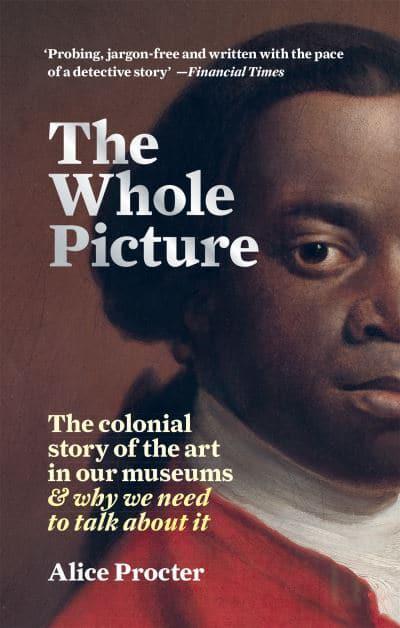
  • I picked up this book at the David Livingstone Birthplace Museum outside Glasgow, Scotland. It has been a fun and interesting read while traveling between Glasgow, Bridge of Allan and Edinburgh. Procter points out uncomfortable truths about some of the objects found in museums such as human remains or ritual artefacts stolen by Europeans from societies under European colonial rule. Art and museum collections care management will become increasingly relevant as we head into the middle of the 21st century.
Sanghera, Sathnam. Empireland: How Imperialism Has Shaped Modern Britain. Viking, 2021. 

  • In September, I visited the Wardlaw Museum in St. Andrews, Scotland. This title was on the shelf in the museum bookshop and on a whim I bought it. Sanghera does a good job presenting the idea of empire and its impact on peoples and cultures around the world. My conclusion: I am a product of empire, as the British colonial experience shaped my ancestors in the 17th century ... both in England and in North America. If you are looking for solid reading about the long arm of empire, this is the book for you. 
Troncoso, Andres & Armstrong, Felipe & Basile, Mara. (2017). "Rock Art in Central and South America: Social Settings and Regional Diversity." 10.1093/oxfordhb/9780190607357.013.53.
  • This article articulates some of the key elements of rock art in Central and South America. As an overview to the topic, it identifies three types of rock art: geoglyphs, pigment arts and petroglyphs. Troncoso et al also provide examples of each type from pre-contact and post-contact societies. I read this article in preparation for a site visit to the petroglyphs called Piedras Pintadas en Caldera south of Boquete, Panama.

Wednesday, April 7, 2021

2021 Books in Review

My reading selection this year has been diffuse and random. I started 2021 wanting to read more Indigenous voices but then found it challenging to stay focused. The emphasis shifted to just reading whatever fiction floated my way. I think the randomness of this reading list is a metaphor for the instability of living through a pandemic. 

Blanding, Michael. North by Shakespeare: A Rogue Scholar's Quest for the Truth Behind the Bard's Work. Hatchett Books, 2021.

  • To know me is to know that I love Shakespeare. I love reading his plays and sonnets, and I love reading about him in biographies and critical analysis. Blanding's book challenges me, however, as it works to present a new (and some would say heretical) narrative about the source texts for most of Shakespeare's plays as coming from a man named Thomas North, an aristocrat who served Queen Elizabeth I in various capacities in the late 16th century. Blanding acts as the critical voice who presents Dennis McCarthy and his research into North. This explains the title, but there is much, much more. According to McCarthy, most of the plays we believe are Shakespeare's are actually autobiographical moments in North's life. It's a good book if you are into Shakespeare and his body of work in new and uncomfortable ways. 

Ford, Jamie. Hotel on the Corner of Bitter and Sweet: A Novel. Random House, 2009.

  • This is a well told, if not formulaic, novel about race and racism in mid-20th century Seattle. Ford knows how to weave characters and plot a narrative arc that are at once interesting and engaging. If you are looking for a heartwarming story with a hint of social justice but that's also a page turner, then this is the book for you!

Garcia, Gabriela. Of Women and Salt: A Novel. Flatiron Books, 2021. 

  • This book came to me from a list of recommended new authors. Garcia writes an engaging story about several generations of women, mostly from the same family, whose lives span the shores of Cuba and Florida. Although there are moments when the reader can recognize this is the narrative of a new writer, there is also the hint that Garcia's best work is still to come. 

Grandin, Greg. Empire's Workshop: Latin America, the United States, and the Making of an Imperial Republic. Updated and Expanded. Picador, 2021. 

  • Grandin is a great historian who brings passion and storytelling to often grim historic events. This is the third book by Grandin that I've read, and I find it to be the most compelling of them all. The premise of this text is that the US uses Latin America as a workshop to practice and refine its empire building project. Along the way, the US causes massive destabilization, violence and misery among the people of Latin America. It is US foreign policy that forces people to migrate. It is US domestic policy that demonizes those who immigrate. And the wheel turns on and on. This is a good book with lots of receipts, but be advised: it will make you angry at the money spent and the blood shed with our tax dollars. The only way we change this dynamic is for the American people to insist that the Biden Administration break the cycle. Are you in?
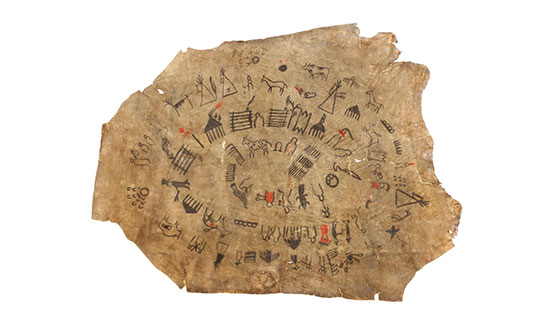
Hämäläinen, Pekka. Lakota America: A New History of Indigenous Power. Yale University Press, 2019.
Lakota Winter Count,
circa 19th century
Houston Museum of Natural Science

  • History is the act of keeping records. One thing that's largely missing in traditional histories of Indigenous people is the story of their existence from their perspective. Hämäläinen seeks to overturn that practice of centering Indigenous history around Anglo-American documents and Westernized perspectives by presenting the history of the Lakota people through their Winter Count records. The Winter Counts were recorded on buffalo hides, chronicling events that the Lakota people experienced in any given year. Hämäläinen also seeks to write a history of the Lakota that subverts common mythologizing about the Sioux when he asserts that "the great paradox of Lakota history is that by helping prevent the realization of other Wests -- French, British, Spanish -- Lakotas inadvertently paved the way for the American West and, eventually, their own downfall. The italics are Hämäläinen's. This is a sprawling and provocative history. If you're interested in seeing Indigenous history in a brand new way, this is a good book for you!

Hamer, Marc. Seed to Dust: Life, Nature, and a Country Garden. Graystone Books, 2021. 

  • Hamer writes a quiet memoir about life, gardens and the people he loves. Woven into the pattern of four seasons, this book chronicles the subtleties and internal workings of plants, animals and humans. It is one part botany, three parts philosophy ... neither of which the reader realizes until nearly the last page. It's a healing story, something I've found helpful to get me through the instability of living through a pandemic. 

Ishiguro, Kazuo. Klara and the Sun: A Novel. Alfred A. Knopf, 2021. 

  • It's an unexpected story about robots and redemption. Ishiguro is a fine writer who knows how to build characters, develop narrative arc and create vivid imagery. What I wasn't expecting is the emotional investment I got from reading about AFs (Artificial Friends) and the people who used them. 

Levitt, Peggy. Artifacts and Allegiances: How Museums Put the Nation and the World on Display. University of California Press, 2015.

  • Museums are changing. This book seeks to present some of the ways in which museums have historically exhibited their holdings, but it also explores the difference between museums with a nationalistic focus and museums with an international focus. It's a provocative way of understanding objects on display in a museum, as well as the intended and unintended messages those displays provide to the public. 

Neiman, Susan. Learning from the Germans: Race and the Memory of Evil. Picador, 2019.

  • I read this book in the closing days of the Trump Administration, ironically or not, during the failed insurrection to overturn the results of the 2020 election. The book combines an exploration of racial attitudes in post-World War II Germany with historical analysis and first person reporting of racism in the United States. Neiman is Jewish and grew up in Georgia. Later she moved to Germany, where she experienced Germany's attempts to reconcile their anti-Semitic past. The book moves back and forth between the two countries, both in time and place, offering insightful analysis of the ways in which racism is used to strengthen authoritarian regimes. 

Obama, Barack. A Promised Land. Crown, 2020. 

  • Obama is a good writer. If he hadn't gotten into politics, it's likely he would have become a successful writer. As it is, he's written three books, all of which I've read, with mastery and eloquence. There are equal doses of philosophy, humor and political intrigue in this one, including a suspenseful telling of the capture of Osama bin Laden. One aspect of Obama's narrative that keeps me coming back for more: his optimism about democracy. Even in the face of historic levels of obstruction from the GOP, Obama is still upbeat about democracy's potential. This, along with some really good story telling, makes this 700 page book worth the effort. 

Rakove, Jack N. James Madison and the Creation of the American Republic. Pearson, 2007.

  • Rakove is a first rate historian. He is well versed in the nuances of the Revolutionary Period in US history, which comes across quite clearly in this text. But truly, sometimes he gets into the weeds with the minutiae of history. Yet the last couple chapters of this book are quite remarkable in their insight and explanation of Madison's legacy. I've read this book twice now and learned new ideas both times. It's a strong addition to any library on the Founding Fathers.

Silverman, David J. This Land Is Their Land: The Wampanoag Indians, Plymouth Colony and the Troubled History of Thanksgiving. Bloomsbury, 2020.

  • This book goes far beyond what the title suggests. Although it definitely treats the subject of Thanksgiving, it also explains relationships and challenges that New England Indigenous groups experienced in the 17th century. For those who want a detailed view of Indigenous-colonial relations in New England, this is a good one.

Sylvester, Natalia. Everyone Knows You Go Home: A Novel. Little a: 2018.

  • Sylvester is a new-ish author who tells a good story by weaving characters in both time and space. There is an element of magical realism here, complete with ghosts and dreams about the dead. One also gets the sense that Sylvester is working through the process of writing in English when Spanish is her first language. It's an interesting process for the reader, and Sylvester should be commended first for attempting it and second for doing it well. This is a good story that explores what it means to go home when living in the US as an immigrant.

Thiers, Barbara M. Herbarium: The Quest to Preserve & Classify the World's Plants. Timber Press, 2020.


  • My husband gave me this book for Christmas. It is a sweet text full of images, maps and drawings of plants in a one-of-a-kind collection. If you are interested in herbariums, this is a delightful blend of art and history as it intersects with botany and field studies of plants around the world.

Tyson, Cicely and Michelle Burford. Just As I Am: A Memoir. Harper, 2021.

  • Just days before she passed, Cicely Tyson posted on social media that her memoir had been published and was available for purchase. I ordered a copy, only to learn that she died the same day. Along with being an amazing actress of the 20th century, Tyson was a good human being. There were events in her life that I had no idea she experienced, but learning them in this autobiography only made her story more endearing. This is a feel good book with a special message for Black women at the very end.

Yu, Charles. Interior Chinatown: A Novel. Vintage Books, 2020. 

  • This is probably one of the funniest books I have ever read. It's also brutally honest about racism and stereotypes about Asians. Others seem to agree with that assessment since it was recently named the National Book Award winner for 2020. As a novel, Yu spins the story around actors trying to break into the Hollywood film scene. There's Generic Asian Man, Young Oriental Flower, Wizened Chinaman and Old Asian Woman. Oh, and don't forget the Kung Fu Dad, too! None of these characters get hired beyond the flat stereotypes depicted in their names. By presenting characters the way he does, Yu heads straight into the world of Asian stereotypes, illuminating their absurdities with humor and dignity when he writes, "There's just something about Asians that makes reality a little too real, overcomplicates the clarity, the duality, the clean elegance of BLACK and WHITE, the proven template and so the decision is made not in some overarching conspiracy to exclude Asians but because it's just easier to keep it how we have it ... You wonder: Can you change it? Can you be the one who actually breaks through?" (39). Later Yu answers this question when he writes, "Ever since you were a boy, you've dreamt of being Kung Fu Guy. You're not Kung Fu Guy. But maybe, just maybe, tomorrow will be the day" (45). It's a hopeful, bittersweet story of real people who are flattened into stifling stereotypes by white people who hold all the power. If you want to laugh, and then maybe cry at how sadly funny, infuriating and absurd racism can be, then you should read this book too. 

Wednesday, April 18, 2018

Books and Canals

Of late, I have been walking.
Word on the Water
Regent's Canal, London
To the British Museum. To Hyde Park. To Covent Garden. Today my walk included a visit to Word on the Water, a book barge on Regent's Canal.

Basically it's a book shop in a 100 year old Dutch boat. On sunny afternoons like today, the owners invite local musicians to play live music on the roof.


Moved by the moment, I picked up a copy of George Orwell's Down and Out in Paris and London. After being on the road for nearly four months now, I really identified with the down and out part of Orwell's title. It's a nice little book, partly fiction but mostly memoir, capturing key ideas about his experiences with self-imposed poverty in the 1920s.

And the book commenced with a line from Chaucer -- relevant enough given a previous blog post -- so I splurged nine quid before heading on my way.

"O scathful harm, condicion of poverte!" Chaucer said. Time, and a few pages of reading, will tell whether my condition of poverty -- of the mind or the pocketbook -- has been increased or diminished by this purchase.

London Canal Museum from Regent's Canal
Next stop was the London Canal Museum, a three-story brick building which was a former ice warehouse adjacent to the canal.

The museum chronicles the history of barges and the canals they plied, ice and the horses who pulled it.

The ice was shipped from the south coast of Norway and then stored in warehouses along the canals in London. The horses, massive and dignified under their laboring burdens, pulled the ice-filled canal boats across the English countryside.

Tiverton Canal
photo courtesy of Eclipse Breaks
The earliest canals date to the mid 16th century; by the mid 20th century the practice of hauling ice had been eclipsed by refrigerators and motor vehicles.

Great Crested Newt
photo courtesy of Danni Thompson
Now a new generation of hipsters have begun using the barges for housing, work studios and, as is the case with Word on the Water, floating book shops.

There are also community groups interested in the preservation of the canals, hosting events as varied as Great Crested Newt surveys, art shows featuring canal-themed exhibitions, and towpath task forces to keep the canal banks free of pollution and debris.

The area around Regent's Canal is changing rapidly. My little walk about caught just a small taste of it.


Thursday, January 4, 2018

A Note About Sources

Anyone who knows me knows that I love books. Reading them, talking about them, writing about them.

This fascination with texts and words on the page has led me to study various topics, including Japanese Culture Through Rare Books at Keio University and the Magna Carta with the British Council through FutureLearn. 

My love of books, both reading them and writing about them, also prompted the creation of a common reading program at CRC called OneBook, which began after three years of best practice research in 2010. This was inspired by a National Endowment for the Arts report in 2007 entitled "To Read or Not to Read" wherein the authors concluded that the decline in literacy rates in the United States represents one of the greatest threats to our democracy. As we open the year 2018, with Twitter and other social media striding loudly upon our daily lives, that report may have been much more prescient than even its own authors realized. 
Magna Carta held at the
Bodleian Library, Oxford, signed
by King John at Runnymede
on June 15, 1215

These New Media sources, whether it's Twitter or online universities, allow learning about old texts in new ways, which is what the Digital Humanities is all about. 
Photo by Martin Grandjean
Network analysis: graph of
Digital Humanities Twitter users

It's a rich and exciting field of study that combines primary source documents from the past with contemporary technological applications and analysis. The Digital Humanities are ripe with possibilities in the 21st century for bibliophiles, librarians and academics of all stripes. 

Beyond this brief primer into the Digital Humanities, however, I want to share with you sources in my preliminary research on the study of the Dutch Masters, those artists whose works are found at the Crocker Art Museum and other themes related to 17th century Netherlands. This is, after all, the focus of the sabbatical. 

In preparation for this project, I read many of the texts listed below in 2017. Some of them, including Simon Schama's seminal work about overvloed -- the Dutch word for abundance -- and their  attendant "embarrassment of riches," will be traveling with me for study and application as I visit museums over the next four months. 

Others, such as Matthew Stewart's text on Leibniz and Spinoza were read and reviewed several years ago. Clearly this research has been on my mind for some time, and it is my hope that you will join me in the reading and writing and talking about the texts to follow:

Bibliography

Baird, Joseph Armstrong, Jr. “The Crocker Art Gallery.” Art Journal. 21.2 (1961-1962): 85-88. JSTOR. 4 Oct 2017.

Berger, Harry, Jr. Caterpillage: Reflections on Seventeenth-Century Dutch Still-Life Painting. New York: Fordham University Press, 2011.

Berger, Harry, Jr. Manhood, Marriage, Mischief: Rembrandt’s ‘Night Watch’ and Other Dutch Group Portraits. New York: Fordham University Press, 2007.

Breazeale, William. “Nature and a New Drawing by Otto Marseus van Schrieck.” Master Drawings. 45.4 (2007): 527-533. JSTOR. 4 Oct 2017.

Breazeale, William. “Old Masters in Old California: The Origins of the Drawings Collection at the Crocker Art Museum.” Master Drawings. 46.2 (2008): 205-226. JSTOR. 4 Oct 2017.

Chevalier, Tracy. Girl with a Pearl Earring: A Novel. New York: First Plume, 2001.

Cornelis, Bart and Marijn Schapelhouman, eds. Adriaen va de Velde: Dutch Master of Landscape. Amsterdam: Paul Holberton Publishing, 2016.

Cremers, C. M. “Our Heritage: The Dutch Garden, an Introduction to its History.” Garden History. 2.1 (1973): 10-29. JSTOR. 22 May 2017.

Cruz, Laura. “Turning Dutch: Historical Myths in Early Modern Netherlands.” Sixteenth Century Journal. 39.1 (2008): 3-22. JSTOR. 3 Mar 2017.

Da Silva, Maria Angelica and Melissa Mota Alcides. “Collecting and Framing the Wilderness: The Garden of Johan Maurits (1604-79) in North-East Brazil.” Garden History. 30.2 (2002): 153-176. JSTOR. 22 May 2017.

Den Hartog, Elizabeth and Carla Teune. “Gaspar Fagel (1633-88): His Garden and Plant Collection at Leeuwenhorst.” Garden History. 30.2 (2002): 191-205. JSTOR. 22 May 2017.

Gatacre, Laura. “An English Gardener in a Dutch Historic Garden.” Garden History. 30.2 (2002): 252-262. JSTOR. 22 May 2017.

Honig, Elizabeth Alice. “The Art of Being ‘Artistic’: Dutch Women’s Creative Practices in the 17th Century.” Woman’s Art Journal. 22.2 (2001-2002): 31-39. JSTOR. 23 Oct 2017.

Huygens, Christiaan. “Treatise on Light.” 551-619. Trans. Sylvanus P. Thompson. Newton, Huygens: Great Books of the Western World. Chicago: University of Chicago, 1952.

Israel, Jonathan. The Dutch Republic: Its Rise, Greatness, and Fall 1477-1806. Oxford, UK: Clarendon Press, 1995.

Jardine, Lisa. Going Dutch: How England Plundered Holland’s Glory. New York: HarperCollins, 2008.

Knapp, Anna C. “From Lowlife to Rustic Idyll: The Peasant Genre in 17th-Century Dutch Drawings and Prints.” Harvard University Art Museums Bulletin. 4.2 (1996): 30-59. JSTOR. 22 May 2017.

Liedtke, Walter. “Frans Hals: Style and Substance.” Metropolitan Museum of Art Bulletin. 69.1 (2011): 1, 4-48. JSTOR. 10 Mar 2017.

Liedtke, Walter. “The Study of Dutch Art in America.” Artibus et Historiae. 21.41 (2000): 207 – 220. JSTOR. 1 Mar 2017.

“The Life Story of the Late Margaret Crocker.” San Francisco Call. 91.15 (1901): 4-5. California Digital Newspaper Collection. Web. 3 Jan 2018.

Lowney, Barbara. “Lady Bountiful: Margaret Crocker of Sacramento.” California Historical Society Quarterly. 47.2 (1968): 99-112. JSTOR. 4 Oct 2017.

Panetta, Roger, ed. Dutch New York: The Roots of Hudson Valley Culture. New York: Hudson River Museum, 2009.

Py, Bernadette. “Everhard Jabach: Supplement of Identifiable Drawings from the 1695 Estate Inventory.” Master Drawings. 45.1 (2007): 4-37. JSTOR. 9 Oct 2017.

Rommelse, Gijs. “The Role of Mercantilism in Anglo-Dutch Political Relations, 1650-74.” Economic History Review. 63.3 (2010): 591-611. JSTOR. 3 Mar 2017.

Schama, Simon. The Embarrassment of Riches: An Interpretation of Dutch Culture in the Golden Age. New York: Fontana Press, 1987.

Schama, Simon. “Wives and Wantons: Versions of Womanhood in 17th Century Dutch Art.” The Oxford Art Journal. 3.1 (1980): 5-13. JSTOR. 17 Oct 2017.

Sikkens-De Zwaan, Marisca. “Magdalena Poulle (1632-99): A Dutch Lady in a Circle of Botanical Collectors.” Garden History. 30.2 (2002): 206-220. JSTOR. 22 May 2017.

Soll, Jacob. “Accounting for Government: Holland and the Rise of Political Economy in Seventeenth-Century Europe.” Journal of Interdisciplinary History. 11.2 (2009): 215- 238. JSTOR. 22 May 2017.

Stechow, Wolfgang. Dutch Landscape Painting of the Seventeenth Century. Ithaca, NY: Cornell University Press, 1966.

Stewart, Matthew. The Courtier and the Heretic: Leibniz, Spinoza, and the Fate of God in the Modern World. New York: W.W. Norton, 2006.

Stone-Ferrier, Linda. “Gabriel Metsu’s Vegetable Market at Amsterdam: Seventeenth-Century Dutch Market Paintings and Horticulture.” The Art Bulletin. 71.3 (1989): 428 – 452. JSTOR. 22 May 2017.

Taussig, Karen-Sue. “Bovine Abominations: Genetic Culture and Politics in the Netherlands.” Cultural Anthropology. 19.3 (2004): 305-336. JSTOR. 22 May 2017.

Taylor, Paul. “The Concept of Houding in Dutch Art Theory.” Journal of the Warburg and Courtauld Institutes. 55 (1992): 210-232. JSTOR. 17 Oct 2017.

Turner, Jack. Spice: The History of a Temptation. New York: Vintage Books, 2004.

Van Thiel, Pieter J. J. “Cornelis Cornelisz van Haarlem as a Draughtsman.” Master Drawings. 3.2 (1965): 123-154, 185-199. JSTOR. 10 Mar 2017.

Westermann, Mariet. “After Iconography and Iconoclasm: Current Research in Netherlandish Art, 1566-1700.” The Art Bulletin. 84.2 (2002): 351-372. JSTOR. 22 May 2017.

Wednesday, August 7, 2013

John Adams and the American Presidency


John Adams’ mind was a product of the European Enlightenment. Yet this, according to David McCullough in his Pulitzer Prize winning biography entitled John Adams, was only the beginning of the Adams legacy. The list of contributions made by Adams to the establishment of American society and government is long and weighty. He argued – verbally and in written form -- for independence from Britain at a time when many colonies were clinging to notions of peace with the mother country. He nominated George Washington to be the first commander of the Continental Army.  Adams was largely responsible for the rules and by-laws of the emerging republic’s first navy, and he was instrumental in the creation of the American Academy of Arts and Sciences.  He also served as the second president of the fledgling United States and as a diplomat in The Netherlands and France. Quite possibly though, the most significant aspects of John Adams’ life involved the creation of structures and underlying principles of United States government.

In a 1776 pamphlet entitled Thoughts on Government, Adams produced a work of genius. In it, he laid out the twin themes of independence. “The happiness of the people was the purpose of government . . . [and] that form of government was best which produced the greatest amount of happiness for the largest number” (102). In an era of Enlightenment, Adams was creating a government that “raised fundamental questions about the realities of human nature, political power, and the good society” (101). Largely based on the values of 17th century English political philosopher John Locke, virtue had a prominent role in this “good society.”  Moreover, the primary mechanism for achieving virtue in society was through education. Thus the creation and perpetuation of a virtuous government was dependent upon a “government of laws, and not of men” (222) but also on government’s ability to “spread . . . wisdom, knowledge, and virtue among all the people” through the creation of “private societies and public institutions . . . for the promotion of agriculture, arts, sciences, commerce, trades, manufactures, and a natural history of the country” (223). Of course, Adams is not alone in promoting education in the late colonial and early republican periods. Ben Franklin is also notable for contributions in pursuit of knowledge. For example, Franklin’s hand is behind the establishment of the Library Company of Philadelphia in 1731 (essentially the first library in North America), the American Philosophical Society in 1745, and the University of Pennsylvania in 1749. Thus when Adams presented the idea of a Boston counterpart to Philadelphia’s Philosophical Society it was, in McCullough’s words “enthusiastically taken up” (223) to become the American Academy of Arts and Sciences in 1780.

As important as this reader considers education in a civil society, Adams’ greatest contribution to government can be seen best in the “principle of the separation and balance of powers” (222) which Adams first wrote for the Commonwealth of Massachusetts in 1779, only to later argue for it during the drafting of the Constitution in 1787.  In January 1787, Adams had produced a pamphlet entitled A Defence of the Constitutions of Government of the United States of America. Although hastily written, it is considered to be “an expanded, more erudite rendition of the case for checks and balances in government that he had championed in his Thoughts on Government, and later put into operation in his draft of the Massachusetts constitution” (374). In it, Adams identified the salient features of a government free of monarchy and hereditary aristocracies. “There must be three parts to government – executive, legislative, and judicial – and to achieve balance it was essential that it be a strong executive, a bicameral legislature, and an independent judiciary” (375). Once again the power of Enlightenment principles and concepts is apparent in the structure of government which Adams conceived. In this case, Enlightenment notions of balance and symmetry in the framing of power are paramount. This structure has come to be known as the first, second and third articles of the Constitution which were signed into law in Philadelphia in September 1787, and it is sure evidence of Adams’ tremendous contribution to the narrative of the American story. 

Indeed, within the past week an example of Adams’ independent judiciary can be found in BOUMEDIENE ET AL. v. BUSH, PRESIDENT OF THE UNITED STATES, ET AL. decided 12 June 2008. This decision, although disliked by the President of the United States, ruled against the President and his denial of habeas corpus (Latin for “present the body”). Had Adams not had the foresight to envision the need for a court system which could, if necessary, rule against the executive power without fear of reprisal, the American people – and arguably the world – would not have had habeas corpus restored.

Late in his life, Adams read (or likely re-read) some of the writings of Rousseau, one of the seminal figures of the European Enlightenment. To Rousseau’s line declaring “There is no doubt that people are in the long run what the government make out of them . . .” Adams responded in the margin with “The government ought to be what the people make it” (619). Clearly even in 1815, some thirty years after Adams’ own seminal works were produced, he believed in the power of the people to know what was best for themselves, and to act on that power with rationality and reason. In short, John Adams was a product of the Enlightenment.

John Adams, perhaps more than any other figure in early American history, left a huge collection of written works for posterity to study. In McCullough’s capable hands this wealth of information and ideas are handled well. Subtleties in Adams’ personality are presented clearly and with insight. For example, Adams’ vanity and the concurrent struggle with that vanity appears to be a theme which runs throughout his lifetime. While still a student at Harvard in 1756, he wrote “Oh! That I could wear out of my mind every mean and base affectation, conquer my natural pride and conceit” (41) which suggests he realized a flaw in his character and sought to exorcise it. And yet the tendency toward self promotion seems to have survived the test of time. For example when, toward the end of Adams’ life, he was invited to Faneuil Hall for the unveiling of John Trumbull’s 1818 painting of the signing of the Declaration, his first words were to remind the audience that it was he who in 1775 had nominated George Washington to be the leader of the newly forming Continental Army. On this point, McCullough states that “possibly it was Adams’ old vanity that prompted the remark” (627). This notion, that a Founding Father would embody such a tension, is compelling. It also removes any inclination the reader may have to place Adams – or Franklin or Washington, for that matter – on a pedestal. Adams and his friends are all revealed as great men, but men nonetheless.
     
This book is a rich source for understanding American history. In my case, I read it while on a trip to Boston and Philadelphia. Indeed, I was literally walking the streets and eating at the taverns that are mentioned in the narrative! This, of course, made the historical aspects very lively for me, and I was able to take photos of places with specific events in mind. Because of these circumstances, the book and my travel experiences are closely woven together. Furthermore, I am able to use the photos, the experiences and the knowledge gleaned from the text in my American and Modern Humanities courses. For some time now I have been working on a segment for my classes on the origins of the American Revolution and the development of the ideas embodied in the U.S. Constitution. The study of John Adams goes a long way toward explaining those topics to students. My travel experiences also help make exciting a topic that can be quite boring for students. As much as it is possible, I attempt to show that the “Founding Fathers” – Adams, Washington, Franklin and Jefferson – were real human beings, living real lives and making real decisions. It is the power of those decisions that have had such an impact upon our lives today. In some ways Adams knew the impact their decisions would have when he wrote “How few of the human race have ever had an opportunity of choosing a system of government for themselves and their children?” (102). Or perhaps he realized there would be an impact but what exactly it would look like is open to interpretation, as when he wrote to his wife Abigail in 1774, “We live, my dear soul, in an age of trial. What will be the consequence, I know not” (Preface). In either case, the important didactic point is that people make choices and the choices people make can have long lasting impact on millions (perhaps billions?) of other people over a long period of time. Human agency now is no less than human agency then. Perhaps more than ever, students in the American education system need to learn this concept.

*This book review was written in 2008.*

Friday, June 21, 2013

Knowledge, Culture and Immortality in the Story of Henrietta Lacks


Knowledge is power. This old adage is brought to new life in Rebecca Skloot’s bestselling book entitled The Immortal Life of Henrietta Lacks. Although a work of non-fiction, the text is written like a novel, complete with interesting characters and a plot line that drives the reader to the very last page. But this book is more than simply the story of one woman’s life. Rather, it contains two stories – the human and the scientific – whereby human foibles and frailties are set against ironclad scientific truths; knowledge for the people about the science becomes the key that unlocks the past.

The story of Henrietta Lacks is broken up into three distinct parts. The first section, entitled Life, deals with the mundane travesties of being an African American woman in the 20th century. Indeed her short life – for she died just a few months after her thirty-first birthday – symbolizes all the worst of black life in the U.S.: poverty, poor educational opportunities, inadequate healthcare, physical and emotional neglect. Having met her cousin and future husband Day at the age of four, Henrietta spent most of her youth with him tending farm animals and picking cotton on a former plantation in rural Virginia. By the time she was fourteen, Henrietta had the first of five children. Eventually she also contracted a case of syphilis and a virulent strain of Human Papilloma Virus 18 (HPV) from Day, along with the cervical cancer which brought her short life to an end in October 1951.

Prior to her death, Lacks did manage to go to the hospital – Johns Hopkins in Baltimore, Maryland – for treatment of the cancer. Here, Skloot introduces the reader to researcher Dr. George Gey and his wife, Margaret, who were “determined to grow the first immortal human cells” (30) at a time when “more than 15,000 women were dying each year from cervical cancer” and “few doctors knew how to interpret [Pap smear test] results accurately” (29). Clearly the early 1950s represent an important turning point in the scientific community’s knowledge of cancer and cell tissue. The determinative work Gey did was foundational in the development of that knowledge. Along with Gey, the reader is introduced to Dr. Lawrence Wharton, Jr. It was Wharton who, during a follow up radium treatment visit that Lacks made to Johns Hopkins, “picked up a sharp knife and shaved two dime-sized pieces of tissue from Henrietta’s cervix: one from her tumor, and one from the healthy cervical tissue nearby. Then he placed the samples in a glass dish” (33) and gave them to Gey. According to Skloot, no one told Lacks that samples would be collected, nor was she asked if she wanted to be a donor.

A third individual to whom the reader is introduced is Dr. Howard Jones, Henrietta Lacks’ gynecologist at Johns Hopkins, who described the lump he found on her cervix as “grape Jello” which bled when he touched it. According to Skloot, “Jones cut a small sample and sent it to the pathology lab down the hall for diagnosis. Then he told Henrietta to go home” (15). Of course going home was appealing advice for Henrietta Lacks, who considered “walking into Hopkins . . . [akin to] entering a foreign country where she didn’t speak the language” (16). This leads to the introduction of another important character in the story. Although Johns Hopkins is an institution rather than a person, it does figure largely in what happens to Lacks. Johns Hopkins was initially built in 1889 “as a charity hospital for the sick and poor” and by the 1950s most of the hospital was “filled with patients [who were] black and unable to pay their medical bills” (15). It was also the “only major hospital for miles that treated black patients” (15). Although Skloot does not overtly state it, Jim Crow segregation plays a part in the life – and death – of Henrietta Lacks.

The second section of the book is aptly labeled Death. Here the events surrounding Lacks’ death are riddled with rhetorical perplexities: would the circumstances of her death have been any different if she had been rich? white? lived in another era? went to a different hospital? The reader can never know the answers to these questions, but pondering them allows entrance into some of the most profound human interest elements of the story. On the fateful day when Wharton took the tissue from Lacks’ cervix, her cells began growing in Dr. Gey’s lab. And they continued to grow, even after Lacks died. Through this series of events the reader is drawn in to an exploration of the medical industry, medical ethics, profiteering from medical research and the science of cancer. The problem, as Skloot identifies, was that during the era when scientists were developing cell cultures “there was no formal research oversight in the United States” because “physicians and researchers always protested” against regulation, stating their “fear of interfering with the progress of science” (131). This section, while rich with medical jargon and legal precedents, is handled well by Skloot as she outlines the legal, ethical and moral dimensions involved in early cancer research. It is complicated material, made accessible to a lay reader. In short Lacks’ cells, which have come to be known as HeLa, were turned into a “multibillion-dollar industry selling human biological materials” (101) and used in scientific research. Skloot reports “some scientists exposed Henrietta’s cells to massive doses of radiation to study how nuclear bombs destroyed cells … [o]thers put them in special centrifuges that spun so fast the pressure inside was more than 100,000 times that of gravity” (102). Research with HeLa cells didn’t stop there however: “Cosmetic and pharmaceutical companies throughout the United States and Europe began using them instead of laboratory animals to test whether new products and drugs caused cellular damage” and some “scientists cut HeLa cells in half to show that cells could live on after their nuclei had been removed”(102). Although not comprehensive, this is a representative list of the eclectic ways in which HeLa cells have been used. Unbeknownst to her family, in the years after Henrietta Lacks’ death, her cells were all the rage on the global market, and they began – literally -- to take on a life of their own.

Entitled Immortality, the third section of the book is the longest, comprising nearly half of the entire text. In it, the reader learns much more about the family members of Henrietta Lacks, including her daughters Deborah and Elsie and her sons Lawrence, David “Sonny” and Zakariyya. And, of course, the title concept of the book comes from the ideas contained in this section. In the chapter called “The Secret of Immortality” the reader learns “how her cancer started and why her cells never died” (213), discoveries which were based on the 1980s research of a German scientist named Harold zur Hausen.

Apparently the HPV strain that Henrietta had acquired from her husband was also responsible for giving her the cervical cancer which killed her. Indeed, zur Hausen’s work showed that “Henrietta had been infected with multiple copies of HPV-18” and that it “caused [her] cervical cancer” (212). This happens when the virus “inserts its DNA into the DNA of the host cell, where it produces proteins that lead to cancer” (213).  In the case of Henrietta Lacks, the “HPV inserted its DNA into the long arm of her eleventh chromosome and essentially turned off her p53 tumor suppressor gene” (213). Amazingly because of HeLa, we now understand the long term impacts of exposure to HPV and the need for vaccination, particularly among young girls.

For members of the Lacks family, however, the medical explanation for Henrietta’s cancer and the immortality of her cells was challenging. They had their “own theories about why her cells grew so powerfully” (213). These included God punishing Henrietta for being disobedient, while the disease manifested as “the wrath of the Lord” (213). For the Lacks children -- individuals who had barely received elementary education -- spiritual explanations are much easier to grasp. Yet judgmental notions of Henrietta’s fate made way for other, more optimistic, explanations. This is the other immortality of Henrietta Lacks, and one that drives the reader back into the human side of the story: the family of Henrietta came to understand HeLa as Henrietta’s “spiritual body,” as though she “had been chosen by the Lord to become an immortal being” (296). The differences between science and faith are highlighted in the final section of the book. Indeed, while the Bible asserts that faith requires believing in that which one cannot see, science requires seeing as a primary element of the scientific method. Yet “[f]or Deborah and her family – and surely many others in the world – that answer was so much more concrete than the explanation offered by science . . . God chose Henrietta as an angel who would be reborn as immortal cells” (296). In the eyes of the Lacks family, Henrietta “did enough suffering for everyone down here” (309) and now she is watching them and waiting patiently for them to join her in heaven. In the end, the immortality of Henrietta Lacks is one where Henrietta and her family can be reunited and “do good together out there in the world” (310). The Lacks family “challenged everything [Skloot] thought [she] knew about faith, science, journalism, and race. Ultimately, this book is the result. It’s not only the story of HeLa cells and Henrietta Lacks, but of Henrietta’s family – particularly Deborah – and their lifelong struggle to make peace with the existence of those cells, and the science that made them possible” (7). Thus, in the end, the third section of the book leads the reader back to the very first pages, making for a neatly packaged narrative whereby style mirrors substance.

 
One of the more appealing ideas to emerge about the text is related to Skloot’s own evolution from student to author, and the implications it holds for all other students. In the Prologue, Skloot shares an experience she had as a teenager in a community college classroom. It was her first encounter with HeLa. She says “I first learned about HeLa cells and the woman behind them in 1988, thirty-seven years after her death, when I was sixteen and sitting in a community college biology class. My instructor, Donald Defler, a gnomish balding man, paced at the front of the lecture hall and flipped on an overhead projector. He pointed to two diagrams that appeared on the wall behind him. They were schematics of the cell reproduction cycle, but to me they just look like a neon-colored mess of arrows, squares and circles with words I didn’t understand . . . I was sitting in a college lecture hall at sixteen with words like mitosis and kinase inhibitors flying around. I was completely lost” (2). To this community college instructor who encounters students much like Skloot every semester, the scenario Skloot described resonates accurately. By their very nature, community college students often appear in the classroom without a solid educational foundation on which to stand. They typically lack context, and the study skills necessary to fill the contextual gaps. Beyond delivering content, the task of the instructor is to light a fire, spark a flame, infuse the individual with a spirit of inquiry that will carry the student forward into learning.

It appears that Defler did this for Skloot. She reports that “[a]fter class, [she] ran home and . . . looked up ‘cell culture’ in the index, and there [Henrietta] was, a small parenthetical” (4-5). This inquiry, however, was not the end of it. Several years went by and Skloot continued to search for information about Henrietta. Little did Skloot realize that this hunt for information served as the beginning of her research for the book she later ended up writing. Indeed, she claims that as she “worked [her] way through graduate school studying writing, [she] became fixated on the idea of someday telling Henrietta’s story . . . [she] had the idea that [she would] write a book that was a biography of both the cells and the woman they came from – someone’s daughter, wife, and mother” (6). The point here is that in a community college classroom, at the tail end of a lecture, Skloot learned about Henrietta Lacks. And then she carried that scrap of knowledge around with her for twenty years, steadfastly adding to it whenever she could, before eventually producing The Immortal Life of Henrietta Lacks. She went from being a clueless teenager who did not understand the words on the wall to writing a book that revealed the value of HeLa cells and the person of Henrietta Lacks to millions of readers. And if she can do it, so too can any community college student. While the book, its back story and its author can be inspirational to students and their teachers, Henrietta is an inspiration to all.

The Immortal Life of Henrietta Lacks challenges the reader to explore the impact of racism on the individual in the United States. One of the ways injustice against African Americans has historically been perpetuated is by locking them out of the systems and processes of acquiring knowledge. Separate but equal was the law of the land, as established by the U.S. Supreme Court case Plessy v. Ferguson at the end of the 19th century. Education, particularly before Brown v. Board of Education was decided in 1954, was notorious for under-funding and disenfranchising people of color. Access to knowledge and education and, thereby to power, was limited. Thus black people in the United States could not know what they did not know. Henrietta – who was born in 1920 and died in 1951 -- lived her entire life under these conditions.

            As one reads the text, the chasm of experience between black daily realities and white mainstream America is profound. Henrietta never went to school past the sixth grade. Yet all of the doctors who performed work on her body or with her HeLa cells each completed years of education beyond the elementary level. Henrietta received questionable medical treatment, and her family members struggle – even today – to obtain adequate health care for their myriad poverty-related healthcare issues. Indeed, Henrietta’s son Zakariyya perhaps said it most poignantly: “Them doctors say her cells is so important and did all this and that to help people. But it didn’t do no good for her, and it don’t do no good for us. If me and my sister need something, we can’t even go see a doctor cause we can’t afford it. Only people that can get any good from my mother cells is the people that got money, and whoever sellin them cells – they get rich off our mother and we got nothing” (246-247). Ironically the medical institutions which benefit from researching HeLa cells cannot provide basic health care services for the living family members of Henrietta Lacks.

            This, then, reflects the irony: scientific research benefits science but not individuals. It becomes science for science’s sake. Clearly the research performed with HeLa has not benefited Henrietta or the living members of her family. Scientific knowledge is advanced on the backs of Lacks family suffering. And the only reason the world knows as much as it does about Henrietta Lacks is due to the tenacious inquiry of Rebecca Skloot. It is as though the cells in Henrietta’s body become a metaphor for what is wrong in U.S. society. Years ago, Professor Defler described the process of cell division to young Skloot and her classmates: “[a]ll it takes is one small mistake anywhere in the division process for cells to start growing out of control . . . [j]ust one enzyme misfiring, just one wrong protein activation, and you have cancer. Mitosis goes haywire, which is how it spreads” (3).  The cell division that went haywire in Henrietta’s body serves as a poignant symbol for the cancer in our society: of race relations which allow some people access to education while forbidding it for others based on the misfired perception of skin color. Of institutionalized racism which mistakenly divides groups of people between those who can enter any hospital from those who can only enter one hospital: Johns Hopkins.

Scientists call the entity which consists of cytoplasm and nucleus a cell. The cell, when held outside the body, is cultured much like the individual who lives in society is fostered in a culture. The cell division of our society – the cultural chasm between black and white – is as much a cancer as any mitosis, poignantly illuminated by the billion dollar industry that sprang up from a poor, and poorly educated, share-cropper’s cells. Ultimately Henrietta’s life and death, along with the immortality of her cells, has become a clarion call to us all. We must challenge the cell divisions of society based on perceived notions of race. We must use the knowledge we have acquired – scientific and humanistic – to honor those who sacrifice parts of themselves in the advancement of society. Skloot’s book brings us this opportunity. In the challenging and the honoring, we would do good together out there in the world.

Monday, January 7, 2013

Ingrid Betancourt and the Jungle of Her Identity


After hearing about the release of Ingrid Betancourt’s memoir entitled Even Silence Has an End: My Six Years of Captivity in the Colombian Jungle during an interview on NPR, I was quite excited to read the book. Betancourt’s 2002 kidnapping at the hands of the Revolutionary Armed Forces of Colombia (FARC), along with her 2008 release nearly seven years later, had been reported in the U.S. and international news. Additionally, I knew a little about the drug trade in the mountainous Amazon jungle region of Colombia and I had recently spent a month in the Brazilian Amazon while on sabbatical. It was for these reasons that I was eager to acquire my own copy of the text and study it. This excitement quickly turned to dismay, however, once I began turning the pages. Indeed, the further along I read, the more I came to dislike the book and the woman who authored it. Her prose was self-absorbed and, at times, seemingly aimless. Because of this, I had to force myself to finish the book. Overall, it was not a pleasant read.
            In retrospect and largely as a result of composing this review, I realize that the distasteful nature of the text is a reflection of Betancourt’s own distasteful experiences in captivity. Rather than beginning in a linear fashion with her capture, she begins telling the story at a moment in the middle of her captivity. While initially I found this very disorienting for the reader, I now appreciate that the disorientation the reader feels is quite small in comparison to Betancourt’s own discomfort. Indeed, Betancourt acknowledges the medias res narrative when, toward the end of the book, she claims that “Time spent in captivity is circular” (461). When one is a prisoner, there is no beginning or end. The italics of this passage are hers but the emphasis is mine. What is time when one is forced to slog through mud, rain and the jungle morass of one’s own nightmarish reality. This is not a rhetorical question. The jungle landscape is a symbol of the twisted identity issues Betancourt encounters. The thick undergrowth, the vicious ants, the inhuman humans are merely physical manifestations of spiritual obstacles which she must overcome. Indeed, these serve as the basis for the four overarching themes of the book: freedom in captivity, identity, silence and physical manifestations juxtaposed against spiritual transformations.
Thus, the first chapter of the book opens with an escape scene. During the course of this attempted escape, her emotions swing from high to low. This too is part of the disorientation into which she initiates the reader. She insists that she “had to walk, keep moving, get away . . . but with each step I kept repeating I am free, and my voice kept me company” (10).  The notions of freedom and of voice – or the inverse of voice, silence – take on a prominence throughout the text. Almost immediately after she rejoices in her freedom, her emotional state swings to a paralyzing fear. She realizes she “had not suffered enough to find the rage [she] needed in [her] guts to struggle to death for her freedom” (11). Within moments of this awareness, she is caught by one of the female FARC guards.
This, then, is the journey, for Betancourt and for the reader, into a nightmare world of capture and release, freedom and captivity. She muses that “the relief that comes from recovering [her] freedom cannot in any way be compared to the intensity of the suffering [she has] known” (27). While faintly reminiscent of a biblical passage, it also calls to mind the enduring hope of freedom. Later, in chapter 52, Betancourt is teased by one of the guards with the idea of being released. Even when she knows that the FARC guard is lying because “lying was considered the sign of a good warrior” (333) she allows her mind to dream. “By pronouncing the word ‘freedom,’ he’d opened a box that [she had] kept double locked. [She] could no longer stop the flood of raving visions that submerged” her mind (333). She thought about her children, her home, her mother’s perfume and a pair of fashionable shoes. The thought of freedom represented comfort, luxury and civilization. But freedom also represented a return to identity, another important theme twisting through the narrative. In this case, the thought of freedom leads her to realize that “she wanted so badly to become [her]self again” (333). These intertwining themes of freedom and identity – like trees growing up from the jungle floor -- are poignantly developed in chapter 77 when Betancourt stalwartly resists a FARC leader’s efforts to obtain a proof of life of his captive. In this instance, Enrique wants to produce a videotape of Betancourt, proof that she is alive, to use as political leverage in negotiations. Betancourt refused. She wanted “no part of their manipulative pretense” (490). She felt “a sort of lull in [her] suffering, because [she had] accepted what had happened to [her and she] hated Enrique” (490). But in her acceptance of her fate, she acquired wisdom and strength. She realized the fundamental truth of freedom and identify when she said:
I almost felt sorry for him. Of course he would get [the proof of life video], but it didn’t interest me anymore. There lay my victory. He no longer had a hold on me. Because I had already accepted that I could die. My entire life I had believed I was eternal. My eternity had stopped here, in this rotten hole, and the presence of imminent death filled me with a peace of mind that I savored. I no longer needed anything; there was nothing I desired. My soul was stripped bare. I was no longer afraid of Enrique. Having lost all my freedom and, with it, everything that mattered to me – my children, my mom, my life and my dreams – with my neck chained to a tree – not able to move around, to talk, to eat and to drink, to carry out my most basic bodily needs – subjected to constant humiliation, I still had the most important freedom of all. No one could take it away from me. That was the freedom to choose what kind of person I wanted to be. (491)
What the reader realizes, along with Betancourt’s own epiphany, is that the fear she experienced in the opening pages has made way for a kind of release that transcends her captivity. She may be in chains but she is free. And with this awareness comes another: “the realization that [she] was no longer a victim. [She] was free to choose to hate or not to hate. [She] was a survivor”(491). The jungle of the physical realm may still hold her captive, but the jungle of her inner world – and arguably of the reader’s too – has been conquered. Thus while the narrative begins with an escape of the physical realm, the book ends with an escape of another kind, into another realm. In one of the most unbearable places on earth, Betancourt has conquered the jungle of her identity.
            Perhaps the most appealing aspect of Even Silence Has an End can be found in the expressions of compassion Betancourt extends to others, including her captors. Arriving at compassion and forgiveness challenges her, yet it appears to be part of the process of understanding her identity too. For instance in chapter 14, as the day of Betancourt’s daughter’s birthday approaches, she decides to throw a party with some of the FARC guards who are about the same age as her daughter. As the guards begin dancing she realizes “these young people could have been [her] children. [She] had known them to be cruel, despotic, humiliating” yet in that moment she “understood that we are all fundamentally the same” (133). Rather than allowing hate toward her captors to foster inside her, Betancourt chose see them as human. Indeed she claims to have “grown aware of how complex we human beings are. Because of that, compassion appeared to [her] under a new light, as an essential value for dealing” with her present condition (133).  Indeed, she saw compassion as “the key to forgiveness” (133). The italics are Betancourt’s and they represent her desire “to set aside any inclinations of vengeance” toward her captors (133). In this reader’s interpretation, they represent her spiritual transcendence.
            This compassion also was extended towards other prisoners of the FARC, including complete strangers. At one point, the small group with whom Betancourt had been imprisoned was merged with another group. Upon first seeing the strangers, she recounted how “it was almost indecent to be looking at them; their humiliation was laid bare, irrevocably exposed. They were human beings who had been dispossessed of themselves while they waited for others to decide their fates” (211). While it is clear that she saw herself in them, it is also a kind of compassion that allowed her to see their unique humanity. This was brought home most poignantly when she said “I felt sorry, sorry to see them like this and sorry they would know they were seen” (211). Again, this extension of self to other – and the willingness to set aside judgment under the most horrific circumstances -- appears transcendent to the reader who sits in the comfort of her living room.
            What’s more, this compassion was also extended to non-human creatures of the jungle. On numerous occasions, Betancourt relates instances when the FARC guards treat animals in ghastly ways. In one instance it was a snake, in another it was a guacamaya. During one particularly graphic incident, a monkey was shot and Betancourt relays with alarming detail the way in which the monkey “put her finger in her wound and looked at the blood coming out” (344). Beyond the anthropomorphic projection, however, Betancourt realized that she was at least as capable as the guards of doing this kind of harm to other humans, and she “understood that [she] could be like them” (344) in her hatred for her captors. She recognized that she was “in danger of becoming like them. The worst would not be to die; the worst would be to become something [she] abhorred” (346). This understanding was extended when she realized that her fierce desire for freedom might lead her to killing the guards, and thereby becoming like them.  This she was determined not to do. She was “determined not to become a murderer. [She] would not kill, even to escape. Nor would [she] eat monkey meat” (346). If the two – killing to escape and eating monkey meat to survive – seem like non-sequiturs, Betancourt acknowledges this when she says she does not “know why the two seemed to go together in [her] mind, but it made sense” to her (346). Thus the reader is offered is the identity formation, the chilling determination and the compassion of a woman in captivity.
           Despite the displays of compassion, the text is problematic. Betancourt’s narrative is self – centered and often self – aggrandizing. Even the subtitle, My Six Years in Captivity in the Colombian Jungle, with its emphasis on My, speaks to her self focus. There were, after all, several others who were captured with her and with whom she shared the suffering and horror of captivity.  In numerous instances, she did come across as a prima dona. Yet my judgment of her is tempered by the acknowledgement that Betancourt was a FARC prisoner in one of the most dangerous and remote regions of the world. Perhaps her self focus was a necessary mechanism for her survival. Perhaps it was her way of not succumbing to Stockholm Syndrome, whereby the captive identifies with the captor. Certainly it is part of what makes the book rich for analysis. The reader must confront the reader’s own identity jungle as a by-product of comprehending the magnitude of Betancourt’s experiences.
            Finally a word about silence, both as a theme and as a key concept in the title of the text, Even Silence Has an End. Silence, and its inverse, sound – in the form of words,  whether written, spoken or heard on the radio -- play a profound part in Betancourt’s psychological health and identity formation. For example, in the months before she was rescued, the interplay between words and silence kept her spirits up when she was very ill and thought she might be dying. She thought about her father, and the way in which he read poetry to her: “he was arming [her] for life. It was his words that [she] heard” (489). Thus words were life. But the poem she remembered her father reciting, by Pablo Neruda, exclaimed “There is no silence that does not end” (489), thereby ensuring that she was “killing [her] fears with Pablo Neruda’s claim over death” (489). Life conquers death just as words conquer silence. Betancourt took great consolation in the notion that the silence imposed upon her by the FARC would some day end, and that life would return. She recognized “how heavily [her] enforced silence weighed” (461) but that there was power in the silence. Yet, this power cut in many directions. One the one hand, the FARC guards used silence to punish and control the captives. They confiscated radios that the captives used to listen for news of the outside world. The guards also forced the prisoners to whisper or pass notes as forms of communication.
However the captives also used silence as mechanisms for control, for example when Betancourt mused about her hatred for the guards, “with every word, every order, every affront, [she] stabbed them with [her] silence” (344). Unfortunately the captives also attempted to gain power over each other as well as over the guards, as in the time when Betancourt realized that she was “shocked . . . with how little [she] knew about the inner workings of [her] own personality” (205) and that “in captivity [she] discovered that [her] ego suffered the moment [she] was deprived of something [she] wanted. It was over food that prisoners, urged on by hunger, waged silent battles” with each other in attempts at taking control of their circumstances (205). Silence is thereby related to power – taking it, keeping it – but also to humiliation. It is easier to remain silent and thus not show one’s humiliation, which is made poignantly real when Betancourt reflected on memories and whether or not to talk about them with others:
My companions wanted to speak, to confide in us, but the terrible things they had experienced kept them silent. I could easily understand. As you share memories, an evolution occurs. Some facts are too painful to be told; in revealing them you relive them. And then you hope that as time goes by, the pain will disappear and you’ll share with others what you’ve experienced and unburden yourself of the weight of your silence. But often, even if you no longer suffer when you revisit the memory, you keep quiet out of a feeling of self-respect – a reluctance to expose your humiliation. (213)
It is worth pointing out that in one of the most psychologically penetrating passages in the entire book, Betancourt refrains from using the first person “I” but instead employs the third person “you”. This is projection of the trauma onto the reader – you – as a mechanism of control over the experience. Betancourt wants to talk about the silence, but can only do so in the third person. Ultimately then, this is the silence that must come to an end; the “weight of the silence” is about two pounds and comes in the form of a hard back book.
Works Cited
Betancourt, Ingrid. Even Silence Has an End: My Six Years of Captivity in the Colombian             Jungle. New York: Penguin Press, 2010.

2023 Reading List

The year begins in Panama, which influences the reading selections. Also I have set a goal for myself: I want to read at least one book each...